If you have spent any time researching putter technology, you have run into BGT golf. Breakthrough Golf Technology is the Richardson, Texas company behind the Stability putter shaft, the component that turned a part of the club most golfers never thought about into a genuine performance decision. For serious players in Berks County, from Reading and Wyomissing to Wernersville, Sinking Spring, and West Lawn, the question is not whether BGT makes interesting equipment. The question is whether the right BGT shaft, built to your exact specs, actually changes what your ball does on the course. That is a fitting question, and it deserves a fitting answer backed by real data.
This guide covers what BGT makes, how the Stability putter shaft models differ, where the wedge and wood shafts fit into a bag, and how a private fitting studio measures whether a shaft change is helping you or just costing you money. No hype, no pressure, just the details a player needs before ordering.
BGT, short for Breakthrough Golf Technology, is headquartered at 1850 Greenville Ave, Ste 184, Richardson, TX 75081, and can be reached at 1-972-972-8882. The company was founded by Barney Adams, the industry veteran behind Adams Golf, and launched around 2014 with a simple premise: golf shaft design had gone largely unchanged in categories where it mattered most, starting with the putter.
Adams built his reputation on solving equipment problems that other companies treated as settled. BGT applied that same mindset to the shaft, arguing that the shaft is the part of the club that transmits everything the player does at impact. From that starting point, the company developed an ultra-stiff, low-torque putter shaft and expanded into wedges, fairway woods, and drivers. Today BGT products are played at every level of professional golf and sold direct through the company and through select custom fitting accounts.
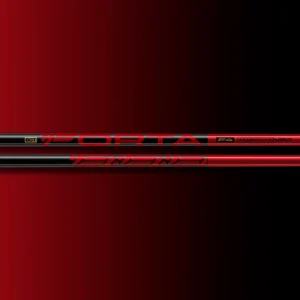
Every shaft in the Stability family shares the same engineering idea: make the shaft ultra-stiff and virtually zero torque, with a slim, tour-inspired profile and a balance point similar to traditional steel so the putter still feels familiar in your hands. The differences between models come down to profile refinement, weight, materials, and price.
Stability One is the entry point at $329.99 direct. Stability Tour steps up to $359.99 and is the model most often associated with tour usage. Stability Tour Long, also $359.99, serves longer putter builds where the standard length will not fit correctly. All three keep the low-torque character that defines the line.
Stability Carbon Pro is listed at $329.99 and uses carbon in its construction. The Stability Tour M Edition is the premium option: $409.99 for the 2026 version, with the 2024 M Edition listed as high as $499.00 by some retailers. If you are comparing models for your own putter, the honest approach is to test each one on a launch monitor rather than assume the most expensive shaft is the right shaft for your stroke.
Putter heads get the marketing. Shafts do the work. A putter shaft that flexes and twists during the stroke adds face rotation you did not intend, and that rotation shows up as pulls, pushes, and inconsistent start lines under pressure. Because the Stability design is ultra-stiff with virtually zero torque, it limits that unwanted face movement through impact.
The practical result is tighter dispersion on putts struck away from the center of the face and more repeatable distance control on long lag putts. Players who fight a two-way miss on the greens tend to notice the change fastest, because the shaft removes a variable they were unconsciously compensating for with their hands. That is not a feel gimmick. It is a measurable change in how the face arrives at the ball.
A vessel golf bag is not the first upgrade most golfers think about, and that is exactly why it deserves a closer look. You can spend $500 on a new driver and still fight the same club tangle, bag chatter, and wasted seconds on the first tee that you dealt with last season. The bag is the one piece of equipment you touch on every hole, and a well-built one protects the clubs you paid to have fitted while keeping them organized, accessible, and quiet.
Vessel Golf has built its following by treating the bag as a precision product rather than an afterthought. The brand sells stand bags, cart bags, lightweight bags, staff bags, and accessories directly through vesselgolf.com and an Amazon brand store, and the golf bags collection currently lists 17 products. What follows is a straight look at the lineup, the pricing, the materials, the top configurations, and how to match a bag to a set of custom-built clubs. For golfers in Berks County, including Reading, Wernersville, Wyomissing, Sinking Spring, and West Lawn, there is also a fitting angle worth understanding before you click buy.
A bag does three jobs that directly affect your score, and only one of them is cosmetic. First, it protects the equipment. Shafts, grips, and adapter sleeves take a beating when clubs rattle against each other for four hours. Second, it controls access. If your clubs bind in the dividers or your putter disappears into a pile, you lose time and focus on every hole. Third, it manages fatigue. Carrying a poorly balanced bag for 18 holes costs you swing speed late in the round, and that shows up as a leak to the right on the 16th tee.
Golfers who invest in a proper fitting often overlook the bag, then wonder why their new irons are showing bag wear within a season. A fitted set has specific lengths, lie angles, and grip sizes. Those specs deserve storage that respects them.
Vessel organizes its golf bags into Player Series, Lux Series, Lux Cart Series, Sunday Series, Specialty Series, staff bags, and junior stands. Pricing is transparent and posted, which is refreshing in a category where premium bags often hide the number until checkout.
The Player Series is where most serious golfers start, and the review data backs it up.
The Lux Series leans toward leather-forward looks and premium trim. Pricing runs from the Lux Air at $339 and the Lux Looper at $369 up to the Lux Carbon Stand at $599. The Lux Looper is worth a note for players who walk with a caddie, since the single-strap layout suits being carried rather than carried by you.
Cart bag options in the Lux Cart Series include the Lux Cart II at $469 with about 818 reviews and the Lux Pro Cart II at $519 with a 2026 Most Wanted badge. If you ride for most of your rounds or push a cart, this is the tier to compare first.
The Sunday Carry sells for $199, making it the least expensive carry option in the catalog and a natural fit for a quick nine or a short set. The Specialty Series and staff bag lineup include models like the Prodigy Mini Staff Bag, which appeals to players who want a tour-style footprint without a full-size staff bag. Junior stands round out the collection for younger players moving into their first real bag.
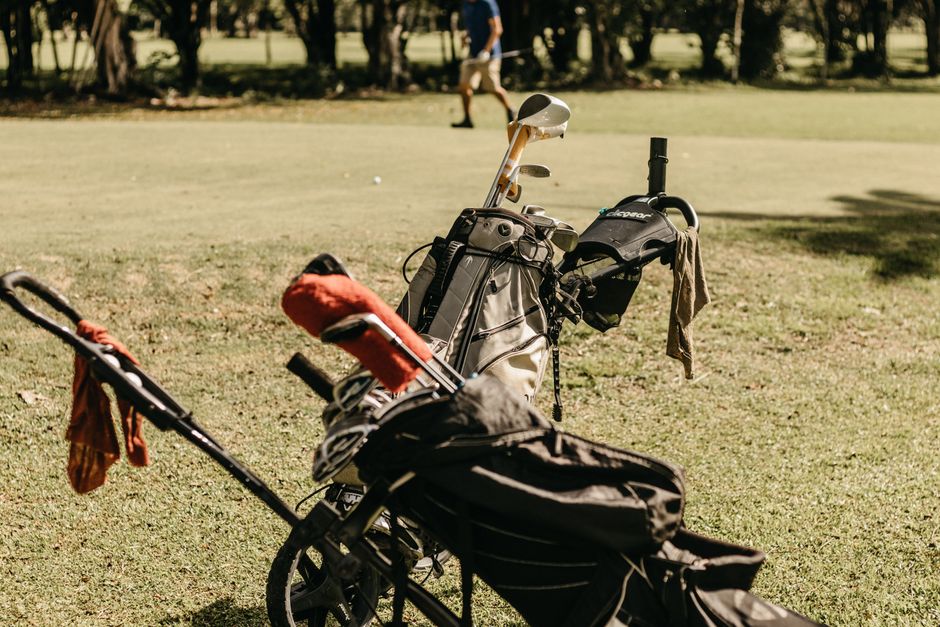
The right answer depends on how you get around the course, not on which bag looks best in a photo.
Choose a stand bag if you walk. The Player Air Stand at $379, the Player Air Carbon Stand at $419, the Lux Air at $339, and the Sunday Carry at $199 are the lightest paths into the lineup. Stand bags also work well on a push cart, which is how many Berks County golfers handle hilly courses without carrying.
Choose a cart bag if you ride. The Lux Cart II and Lux Pro Cart II are built around a stable base and a top layout that faces the rider. Cart bags generally offer more pocket volume and a wider footprint that sits flat on a cart without twisting.
There is a middle path worth considering: a stand bag with a cart strap sleeve, an accessory Vessel sells separately. That combination gives you carrying flexibility plus protection where the strap contacts the bag.
Vessel lists its bag materials in the collection filters as tour-grade synthetic leather, genuine carbon fiber, Cordura, and polyester. Each one solves a different problem.
Zippers, stitching, and hardware are where cheap bags give themselves away in the second season. That is the part of the build you cannot see in a product photo, and it is the part a hands-on inspection in a studio will reveal in about 30 seconds.
Vessel groups its top configurations as 14-way to 15-way, 6-way to 7-way, and 2-way to 5-way. The divider count is the most personal decision in the whole purchase.
One slot per club, plus a putter well, is the cleanest setup for a full 14-club set. If you play oversized or midsize grips, or you have irons built a half inch long or longer, a 14-way top keeps everything separated and easy to pull. Full-length dividers matter here, because partial dividers let grips snag on the way out.
This is the sweet spot for walkers who carry 10 to 14 clubs. You get fewer dividers, less weight, and less material to swing around your shoulder. Grouping irons in pairs is a small compromise for a noticeably lighter bag.
Minimal dividers suit a short set, a Sunday round, or a player who genuinely does not mind a bit of club contact. Lighter and simpler, but less protection and more grip noise.
Weight on a spec sheet and weight on your shoulder are two different numbers. A carbon fiber stand bag can spec light and still carry heavy if the load sits low and away from your back. Check the balance point with the pockets loaded the way you actually play: water bottle, rangefinder, balls, rain gear, and gloves all shift the center of gravity.
Strap design deserves the same attention. A double strap distributes load across both shoulders, while a single strap such as the Lux Looper layout is meant for a caddie to carry. If you walk 18 holes twice a week, test the bag on your back before you commit, not just in your hands.
Pocket layout also affects how you play. A rangefinder pocket you can reach without setting the bag down saves real time, and a valuables pocket that sits against your back is a small but meaningful detail on a wet morning.
This is where a premium bag review meets real club fitting. A custom-built set is not a random collection of 14 clubs. Shafts have profiles chosen for your launch conditions, lies are bent to your swing, and grips are sized to your hands. Those clubs are longer, heavier, or thicker than off-the-rack gear in plenty of cases, and the bag has to accommodate them.
Three things to verify before buying:
At MB Custom Golf in Wernersville, clubs are built and verified with Mitchell-calibrated tools, which means every loft, lie, and swing weight that leaves the bench is measured rather than assumed. A bag that flops clubs around works against that precision over time. Real data, not guesswork, applies to the bag decision too: measure the set, then match the storage to it.
Vessel states its bag collection has over 10,000 glowing reviews and offers free shipping over $300, 30 day returns, and a 1 year warranty. Those terms are worth reading before checkout, because a $500 bag is a long-term purchase.
Amazon carries older and parallel Vessel models such as the Player 2.0 Stand double strap carry bag, Lux Cart 2.0, Vessel Lite Stand bag, Sunday 2.0, Prodigy Mini Staff bag, and a staff bag tour strap. Prices there can look attractive, but confirm the generation and the warranty path, since parallel listings may not match current models or current return terms.
Vessel also makes golf apparel and accessories, including leather headcovers starting at $79, cart strap sleeves, and a limited edition Vessel x Payntr SL shoe at $240. Headcovers and a strap sleeve together cost far less than a new set of irons and protect far more.
Product photos and reviews only go so far. MB Custom Golf is a private, appointment-only golf club fitting and building studio in Wernersville, Pennsylvania, serving Berks County. It is not a big-box floor with a wall of bags and a pushy aisle. It is a one-on-one setting where you can bring your current set, see how it loads into a bag, and talk through layout, weight, and carry comfort with someone who has measured your clubs.
That is the practical advantage for golfers in Reading, Wyomissing, Sinking Spring, and West Lawn. You get a single expert from fitting through final club build, using launch monitor data and verified specs rather than a sales script. If you are already investing in fitted equipment, bring your bag question to the same appointment and solve both in one visit.
Buying a bag is a small decision compared to a full custom build, but it is the decision you feel on every hole. Pick the series that matches how you travel the course, choose a top size that fits your actual set, and verify the specs before the clubs ever leave the studio.
Iron shaft weight is the number most golfers never check, and it is often the single biggest reason their iron play stalls out. Flex gets all the attention, but the grams in your hands shape how the club loads, how your hands release, and how tight your dispersion looks on the card. Get the weight right and the rest of the fitting gets easier. Get it wrong and no amount of swing work will fully cover for it.
This guide breaks down how iron shaft weight works, what the numbers mean, and how to use your own launch data to land in the right range. The goal is simple: built, measured, and matched to your swing.
Shaft weight has a bigger impact on consistency than shaft flex for most golfers. That surprises people who have spent years chasing flex labels, but the logic holds up. Weight changes the total mass you are swinging, which changes your tempo, your transition, and the point where the clubhead releases. Flex changes how the shaft bends, which matters, but it is a secondary variable for the majority of amateur players.
Irons also magnify shaft errors more than drivers do. A driver gets used 14 times a round at most, usually off a tee with a wide margin for error. Irons cover most of your scoring shots, and a small mismatch shows up immediately as a pulled or pushed shot that misses the green by five yards when it should have been pin high. That is why iron shafts deserve more scrutiny than the shaft in your driver, even though the driver gets more attention in every equipment conversation.
Iron shafts typically range from 55 to 130 grams. On the light end you have graphite options at 55 to 75 grams, and on the heavy end tour-weight steel at 120 to 130 grams. The right range for you starts with one number: 7-iron swing speed.
These ranges are a starting point, not a verdict. A launch monitor fitting refines them with tempo, transition, and dispersion data before anything gets ordered.
The 7-iron sits in the middle of the set and gets hit on a predictable trajectory, which makes it the cleanest sample in a fitting session. Measure the 7-iron and you can project the whole set. Tour professionals often land well above the amateur range: True Temper X7 comes in at 132 grams, Project X 6.0 through 7.0 sits at 120 to 130 grams, and True Temper TI X100 checks in at 128 grams. Those numbers are not a target for most players. They simply show how much mass a very fast, very repeatable swing can handle.
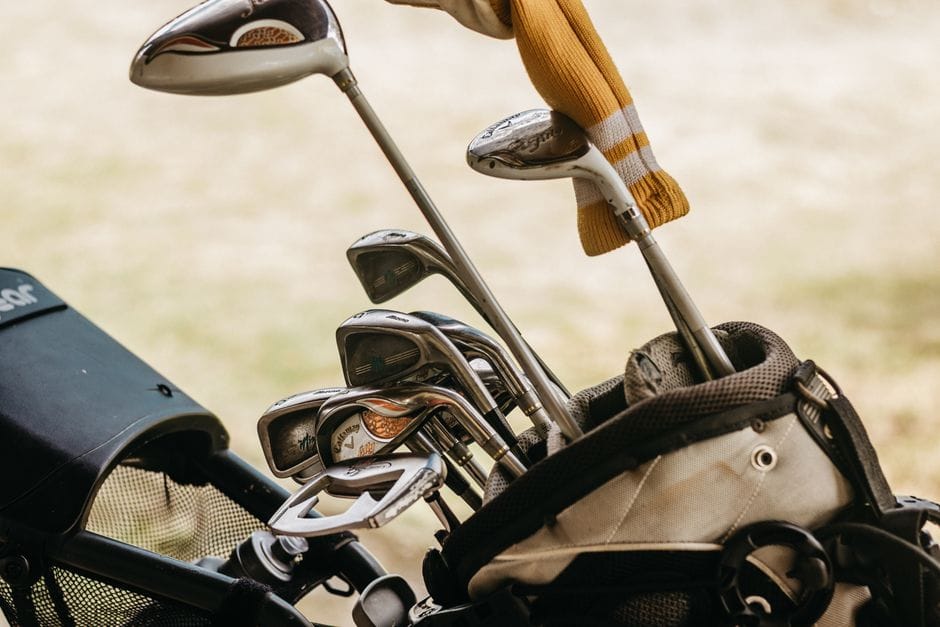
Steel iron shafts typically weigh 90 to 130 grams and offer more feedback and control. You feel the clubhead through the swing, and the extra mass tends to quiet an aggressive transition. Graphite iron shafts typically weigh 50 to 85 grams and absorb more vibration, which matters for players with joint discomfort or a slower swing speed.
The old assumption that graphite means less performance is outdated. The 2026 trend shows tour players moving from 120 gram plus steel into 95 to 105 gram steel or 80 to 95 gram tour-weight graphite, chasing the same control with less fatigue. Graphite has earned its place at every level of the game.
The real question is not steel or graphite. It is how many grams your swing can repeat without losing rhythm, and which material delivers that number with the feel you want at impact.
A shaft that is too light lets your hands get ahead of the club and creates an inconsistent release point. The club feels whippy, your miss spreads both ways, and your distance control suffers because you never quite know where the bottom of the arc is. A shaft that is too heavy forces you to muscle the club and destroys rhythm. You start swinging harder to load it, and hard swings rarely repeat.
Fatigue is the quieter problem. An extra 10 grams per club adds up over 18 holes, and clubs can feel noticeably heavier on the back nine than the front. If your ball striking fades around the 14th hole, weight may be part of the story.
Real player data backs this up. A GolfWRX forum discussion from a player with 113 mph driver speed and a 165 yard 7-iron found that 90 gram shafts hurt his tempo, and he had success no lighter than 115 grams. On the other end, a 74 year old golfer moved to much lighter graphite shafts with excellent results. Weight needs change with age and swing speed, and there is no shame in going either direction.
Most golfers can identify a weight problem before they ever see a launch monitor. Watch for these patterns:
Two or more of those signs is a strong signal that the issue is not your swing, it is the grams in your hands.

A launch monitor fitting measures real data: swing speed, tempo, transition, and dispersion. Real data, not guesswork. That matters because there is no universal flex standard. One manufacturer's stiff can play like another manufacturer's regular, so comparing labels across brands tells you almost nothing about how a shaft will actually perform.
Consider the averages. The average male amateur swings a driver 85 to 95 mph, which fits Regular to borderline Stiff, not the X-Stiff many golfers default to. Those players often buy the stiffest shaft on the rack because it feels stable in the store, then wonder why they lose distance and spray the ball on the course.
In a proper fitting, the process runs in a specific order. Swing speed establishes the range. Tempo and transition narrow it. Dispersion data decides it. A quick, aggressive transition usually needs heavier mass to keep the shaft from running away. A smooth, even tempo can often handle lighter weight and pick up speed in the process. Launch conditions confirm the choice, showing whether the ball is launching and spinning in a window you can repeat under pressure.
The shaft market is deep, and the right answer depends entirely on your numbers. These are the profiles that come up most often in a fitting conversation:
None of these shafts is universally better than another. Each earns its place by matching a specific set of swing characteristics, which is exactly why testing beats reading spec sheets.
MB Custom Golf is a private, appointment-only golf club fitting and building studio in Wernersville, Pennsylvania, serving Berks County. There is no showroom floor traffic, no waiting behind someone at a return counter, and no pressure to walk out with a boxed set. Just one golfer, one expert, and a launch monitor.
Golfers from Reading, Wernersville, Wyomissing, Sinking Spring, and West Lawn use the studio because the experience is focused. Every club is fit and built to a golfer's unique swing using real launch monitor data and Mitchell-calibrated tools, so the specs you get fitted for are the specs that show up in the finished club. That last part is the difference between a recommendation and a result.
The process stays honest from start to finish. If your current irons are already in a workable weight range, you will hear that. If a different iron shaft weight would tighten your dispersion, you will see the numbers that prove it. And if you want to understand why 15 grams changed your ball flight, someone will walk you through it in plain language before you ever commit to a build.
Iron shaft weight is not a detail you can leave to chance. It decides how the club feels in your hands, how your tempo holds up over 18 holes, and how many of your iron shots finish where you aimed. Measure it, test it, and build around it.
If you are serious about lowering your scores, a golf wedges fitting is one of the most impactful investments you can make. Wedges are not just high-lofted irons; they require precise attention to loft, bounce, grind, and lie to match your unique swing and course conditions. At MB Custom Golf in Wernersville, Pennsylvania, we take a data-driven approach to wedge fitting, using Flightscope launch monitors and Mitchell-calibrated tools to build clubs that perform exactly as intended.
Unlike big-box retailers that offer one-size-fits-all solutions, our private, appointment-only studio focuses on you. Every wedge is built, measured, and matched to your swing. Here is what you need to know about the process and why it matters for your game.
Wedges require a different fitting approach because they are used for partial swings, specialty shots, and specific turf interactions. While iron fitting often emphasizes distance and launch angle, wedge fitting prioritizes distance control, spin, and trajectory. The bounce and grind of a wedge affect how it interacts with the turf, which can dramatically alter your ability to open or close the face for different shots. A proper fitting ensures that each wedge in your bag has a distinct purpose and gapping that complements your set.
Bob Vokey recommends 4–6 degrees of loft separation between wedges for optimal gapping. Most serious golfers carry three to four wedges, ranging from a gap wedge to a lob wedge. Without a custom fitting, many players end up with overlapping distances or gaps that are too large, leaving them vulnerable on approach shots. Additionally, wedge fitting accounts for swing type: a player who takes a deep divot needs higher bounce, while a sweeper benefits from lower bounce and a grind that prevents the leading edge from skipping. These nuances are lost in off-the-rack purchases, which is why a dedicated golf wedges fitting session is essential for consistent short game performance.

A professional wedge fitting at MB Custom Golf follows a systematic process to eliminate guesswork. Here is what you can expect during your appointment:
We use a Flightscope launch monitor to capture real data on your current wedge performance. This includes carry distance, spin rate, launch angle, descent angle, and spin axis. We analyze these numbers to identify gaps and inconsistencies. Trackman also measures angle of attack and dynamic loft, which directly influence turf interaction. Based on this data, we can recommend the ideal bounce and grind for your swing style. For example, a steep angle of attack often pairs with high bounce to prevent digging, while a shallow attack suits lower bounce for clean contact.
Using Mitchell bending tools, we adjust each wedge to meet your exact specs. Lie angle affects shot direction, especially on partial swings. Standard off-the-rack wedges often have incorrect lie angles that cause pushes or pulls. We bend the hosel to ensure the sole sits flat at impact, promoting consistent face angle and shot shape. Loft gapping is fine-tuned to guarantee 4–6 degrees of separation between wedges, closing yardage gaps from 125 yards and in.
Wedge shafts are often overlooked, but they play a critical role in feel and control. We test different shaft profiles, including steel and graphite options from brands like Nippon and UST Mamiya, to find the right weight and flex for your tempo. A heavier shaft can improve rhythm on partial swings, while a lighter shaft may help maintain speed. Shaft length is also customized: wedges are typically 0.25 to 0.75 inches shorter than the set to enhance control. We check deflection and torque to ensure consistency across your wedge set.
Grip size and texture affect your hands' ability to release the club consistently. We fit grips to your hand size and preference, then build each wedge to precise swingweight and total weight specifications. Every club is verified on a Mitchell scale before it leaves our shop. Finally, we confirm loft, lie, and length with a digital protractor and rule. The result is a set of wedges that feel identical in the hands but deliver varied trajectories and spins, giving you confidence in every yardage.
Three critical parameters define a wedge's performance: loft, bounce, and grind.
Shaft selection is often the most overlooked aspect of wedge fitting. The shaft's weight, flex, and tip stiffness directly influence feel and shot control. For wedge play, consistency of feel is paramount because you rely on touch for partial shots. A shaft that is too light may cause you to lose tempo, while one too heavy can reduce clubhead awareness. We recommend testing several options, such as the BGT Stability shaft for added stability or the Nippon Wedge Shaft for enhanced feedback. The goal is to match the shaft profile to your swing tempo and desired ball flight. Many golfers benefit from keeping the same shaft model throughout their wedge set to maintain predictable feel from one club to the next.
To get the most out of your session, bring your current wedges and note any clubs you struggle with. Think about the shots you face most often: full swings, pitches, chips, bunker shots? Also consider the typical turf and sand conditions at your home course. A prepared golfer can give the fitter better input, leading to more precise recommendations. We recommend arriving with an open mind, ready to try new lofts, bounces, and grinds. If you have a specific shot you want to master (e.g., high soft-landing approach or low spinner), let us know. That information helps us dial in the perfect combination.
For golfers in Reading, Wernersville, Wyomissing, Sinking Spring, West Lawn, and across Berks County, MB Custom Golf offers the only dedicated private fitting studio in the area. Our appointments are one-on-one, with no distractions and no sales pressure. We take the time to explain the data and build a set that fits your swing — not a retail inventory. If you have been wondering, Are my current wedges correct?, the answer is almost certainly no if they were purchased off the rack. A custom golf wedges fitting can close the gaps, improve your distance control, and bring consistency to your short game. Lower scores start with clubs that are built for you. Book your session today and experience the difference of precision wedge fitting in Berks County.
If you've ever wondered why some wedge shots check up beautifully while others dig or skid, the answer often lies in wedge bounce. Bounce golf wedges explained simply: it's the angle between the leading edge and the lowest point of the sole, measured in degrees. This small but critical design feature determines how your wedge interacts with the turf and sand, directly affecting consistency, spin, and control. At MB Custom Golf, we see many players using wedges with the wrong bounce for their swing and course conditions. Here's a comprehensive breakdown to help you choose the right bounce and lower your scores.
Bounce is often misunderstood, but once you grasp it, you'll never buy a wedge off the rack again. Proper bounce selection can turn a frustrating short game into a reliable weapon. Let's dive into the details.
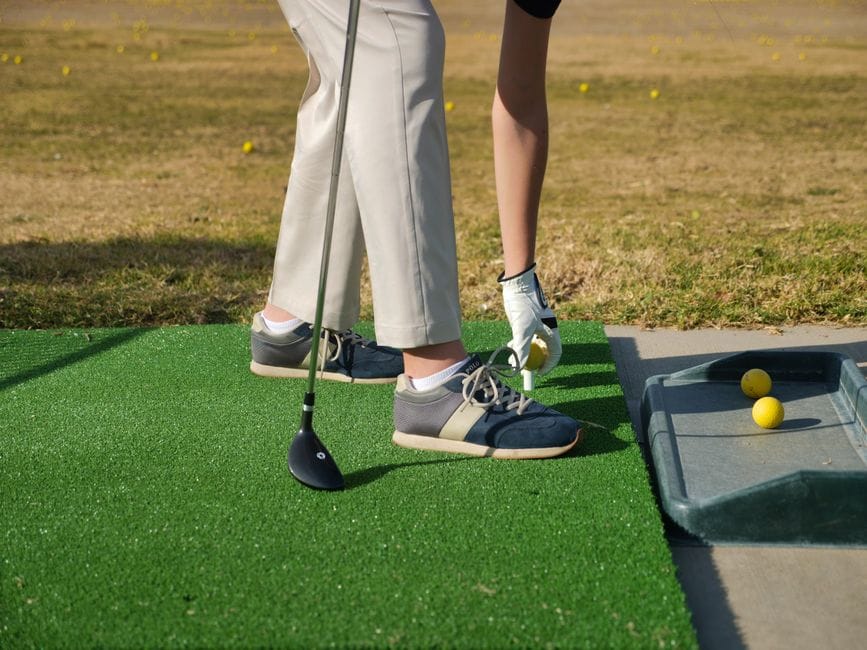
Wedge bounce is the angle formed between the leading edge of the clubface and the trailing edge of the sole when the club is soled on the ground. A higher bounce angle means the sole has more surface area that contacts the turf first, causing the club to "bounce" or glide rather than dig. A lower bounce angle presents a sharper leading edge that cuts into the ground more easily.
Why does this matter? Because every swing and every course is different. A player who takes deep divots (a "digger") needs bounce to prevent the club from digging too deep, which can cause fat or thin shots. A player who sweeps the ball cleanly (a "sweeper") needs less bounce to maintain crisp contact. Likewise, firm turf demands lower bounce, while soft, fluffy sand or lush fairways call for higher bounce.
Bob Vokey, the master wedge craftsman at Titleist, famously says, "Bounce is your friend." He means that bounce provides forgiveness on wedge shots, especially from the sand or rough. Without enough bounce, even a solid swing can result in a chunked shot. With too much bounce, you may struggle to get under the ball on tight lies.
Bounce also affects spin and launch conditions. Higher bounce can reduce spin slightly because the sole contacts the turf more, but it also makes it easier to control trajectory. Lower bounce allows the leading edge to cut the ball more cleanly, potentially increasing spin, but at the cost of being less forgiving on mis-hits. Understanding this trade-off is key to selecting the right wedge for your game.
Bounce angles typically range from 0° to 14°+, but most golfers will encounter three categories: low, mid, and high. Here's what each offers.
Low bounce wedges have a sharper leading edge and a narrower sole. They excel on firm turf, tight lies, and for players with a shallow, sweeping swing. Low bounce is also ideal for shots from hard-packed sand. However, they require more precise strike and can dig on soft turf. Common lofts for low bounce include 60° lob wedges and 56° sand wedges with lower bounce options. Popular models like the Titleist Vokey L grind (4° bounce) or the SM10 with low bounce options are favorites among better players who want maximum spin from tight lies.
Mid bounce is the most versatile range, suitable for a wide variety of turf conditions and swing types. It offers a balance between playability and forgiveness. Many golfers choose mid bounce for their gap wedge or sand wedge as a do-it-all option. If you play on a mix of firm and soft courses, mid bounce is a safe choice. For example, a Vokey F grind with 8° or 10° bounce is a standard option that works for many amateurs. The mid bounce sole typically has moderate camber, allowing it to work well from both fairway and light rough.
High bounce wedges have a wide, cambered sole that helps the club glide through soft turf, fluffy lies, and deep sand. They are best for players with steep, aggressive swings who take large divots. High bounce also aids in preventing fat shots from bunkers. The downside is that they can be harder to get under the ball on tight lies and may cause thin contact on firm ground. Common high bounce wedges include the Vokey D grind (12° bounce) or S grind (10°–14° bounce). Many sand wedges come with 10° to 14° of bounce because they are primarily used from bunkers and soft turf.
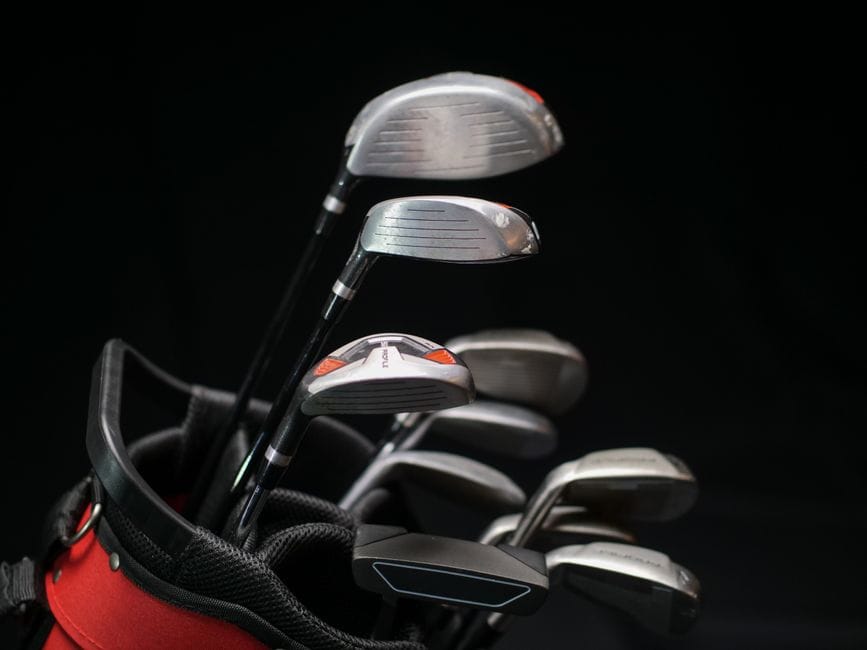
Your swing's angle of attack is the primary factor in selecting bounce. There are three classic swing types:
If you're unsure of your swing type, a launch monitor session at MB Custom Golf can provide real data, including angle of attack and descent angle, to dial in the perfect bounce. Angle of attack is measured in degrees; a steep angle of attack (more than -5°) typically benefits from higher bounce, while a shallow angle (less than -3°) may need lower bounce.
While bounce is the angle built into the sole, grind refers to the shaping or removal of material from the sole to alter how the wedge lies and moves through turf. Grinds can lower effective bounce in certain positions (e.g., heel or toe relief) and increase versatility. For example, a C-grind removes material from the heel and toe, allowing the wedge to rotate open for flop shots without the entire sole contacting the ground. However, grind is a separate consideration from bounce. A high bounce wedge with a grind can still have high measured bounce but behave like a lower bounce wedge in certain orientations.
When selecting a wedge, you may see both bounce and grind options. For example, Titleist Vokey wedges offer multiple grinds (F, M, S, D, etc.) each with specific bounce angles. The F grind has a full sole with standard bounce, while the M grind has more heel and toe relief for shot-making. At MB Custom Golf, we help you understand how both factors impact your short game. We use Mitchell-calibrated tools to measure not only bounce but also the effective bounce after grinding, ensuring your wedge performs exactly as intended.
Most modern wedges have bounce and loft stamped on the head, often under the loft number (e.g., 56.10 indicates 56° loft and 10° bounce). If yours aren't marked, you can have them measured using a Mitchell-calibrated bounce gauge at a fitting studio. Alternatively, you can bring your wedges to MB Custom Golf, and we'll measure them on our Mitchell equipment and discuss whether they're working for your swing.
Another simple test: place the wedge flat on a hard surface and see how much the leading edge sits up. If the leading edge is clearly off the ground, you have high bounce. If it sits nearly flush, you have low bounce. This test gives you a rough idea, but a precise measurement is always better for making educated decisions.
Your wedge set should have a progression of bounce. Many professionals carry a low bounce lob wedge for tight lies and a high bounce sand wedge for bunkers. Amateurs can benefit from similar combinations, but it's best to be fitted for your specific needs. For example, you might have a 50° gap wedge with 8° bounce, a 54° sand wedge with 10° bounce, and a 58° lob wedge with 4° or 6° bounce for versatility.
Choosing wedges based on bounce is one of the most impactful equipment decisions you can make. Without proper bounce, even the best swing can produce inconsistent results. If you're in Berks County, schedule a wedge fitting at MB Custom Golf. Using launch monitor data in a one-on-one private setting, we'll analyze your swing and course conditions to recommend the ideal bounce and grind combination. No sales pressure, just honest advice and precision-built clubs designed to improve your short game. Remember, bounce is your friend, but only when it's matched to you.
When it comes to improving your putting, the putter shaft is often overlooked, yet it plays a critical role in feel, consistency, and roll. Golf putter shafts are not all created equal, and choosing the right one can transform your performance on the greens. Whether you are battling three-putts or looking for more control, understanding how shaft material, bend profile, and stability affect your stroke is the first step to better putting. At MB Custom Golf in Wernersville, Pennsylvania, we see golfers every day who are surprised by how much a properly fitted putter shaft changes their game.
Custom fitting for golf putter shafts goes beyond picking a brand. It involves analyzing your stroke mechanics, launch conditions, and feel preferences using launch monitor data and precision tools like Mitchell-calibrated equipment. This article will guide you through everything you need to know about golf putter shafts, from budget-friendly options to premium performance upgrades, and explain why a local custom fitting can make all the difference. The best putter shaft for you depends on your unique stroke, feel preferences, and budget, and we will cover all the factors that matter.
Many golfers assume the putter head is the only component that matters, but the shaft is the direct connection between your hands and the clubface. A shaft that is too flexible, too stiff, or the wrong length can cause inconsistent face impact, poor alignment, and unwanted torque. The right golf putter shafts provide stability, consistent flex, and the correct bend profile to match your stroke path—whether straight-back-straight-through or arcing. For example, a double bend shaft is ideal for face-balanced putters used in straight strokes, while a single bend or straight shaft suits putters with toe hang for arcing strokes. The shaft also influences tempo: a heavier shaft can slow down a quick stroke, while a lighter shaft may help a deliberate stroke feel more natural. Custom fitting ensures you get the exact bend profile and weight distribution for your natural stroke.
Golf putter shafts are available in steel, graphite, and multi-material constructions. Steel shafts like those from Apollo or True Temper are durable and offer a traditional feel; they range from as low as $6 for an Apollo straight stepped shaft to slightly more for premium stepped models. Graphite shafts, such as the SK Fiber Pro 115 (available in multiple colors at $17.95 each), are lighter and can reduce vibrations for a softer feel. Premium multi-material shafts like the BGT Stability Carbon Pro or TPT Pulse use advanced composites to increase stability and consistency. The TPT Pulse, priced up to $450, is built from a single continuous carbon layer and is exclusively paired with L.A.B. Golf putters. Other top performers include the KBS CT Tour and One Step, Accra Sync, LA Golf P-Series SoHo, Mitsubishi Chemical Diamana P135, and Aerotech SteelFiber, which combines graphite with steel fibers for added stability. Each material affects feel, weight, and feedback, so testing is essential. Steel shafts are generally heavier (110–130 grams) and provide more feedback, while graphite shafts are lighter (50–90 grams) and dampen vibration. Multi-material shafts often fall in between, offering a balance of stability and feel.
The bend profile of a golf putter shaft determines how the shaft aligns with the putter head's balance and your stroke path. Straight shafts are typically used in putters with toe hang for arcing strokes. Single bend shafts are common in face-balanced putters for straight strokes, while double bend shafts also suit face-balanced models but with more offset. Apollo offers all three bend profiles, giving fitters flexibility. A common mistake is using the wrong bend, which can lead to inconsistent face angle at impact. A custom fitting using a launch monitor can identify your stroke type and recommend the optimal bend. For instance, if you have a strong arc, a straight shaft with toe hang may improve feel and face rotation. If your stroke is more linear, a double bend shaft can help keep the face square through impact. The offset added by double bend shafts can also aid alignment for some golfers, but it's not a one-size-fits-all solution.
For golfers seeking maximum consistency, premium shafts like the BGT Stability Tour One, TPT Pulse, and KBS One Step are engineered to reduce twisting and improve energy transfer. The BGT Stability shaft uses a multi-material design with a steel tip and carbon fiber body to increase stiffness without adding weight, resulting in less face rotation and tighter dispersion. The TPT Pulse, made from a single continuous carbon fiber layer, offers exceptional torsional stability and is a favorite among tour players. KBS's CT Tour and One Step shafts feature stepped steel designs that enhance feel and control. Accra Sync shafts use a graphite construction with a unique layup for consistent flex, while LA Golf's P-Series SoHo combines carbon fiber with a metal tip for dampening. These shafts range from $100 to $450 and are best suited for golfers with consistent mechanics who want to eliminate variables. However, even mid-range options like the SK Fiber Pro 115 or the True Temper Tour Concept can provide a noticeable upgrade over stock shafts.
Premium shafts like the BGT Stability Tour One or TPT Pulse are engineered to reduce twisting and improve energy transfer, which can lead to more consistent ball speed and direction. For serious golfers who have already dialed in their putting mechanics, these shafts can produce measurable improvements in dispersion and roll. However, a golfer with an inconsistent stroke may benefit more from working on technique before investing in a $450 shaft. Budget-friendly options like the Apollo stepped shaft at $6 provide excellent value, and many golfers find the SK Fiber Pro 115 graphite to be a great mid-range upgrade. The key is to test different options with real data—not just price. At MB Custom Golf, we use launch monitors to compare performance metrics like face angle, launch angle, and spin, so you know exactly what you're paying for. For many golfers, a $50 graphite shaft that fits their stroke can outperform a $300 shaft that doesn't match their tempo or feel preferences.
One of the most frequent mistakes is choosing a putter shaft based solely on brand or price without considering fit. Another is overlooking length—a shaft that is too long can cause posture issues and inconsistent contact. Also, many golfers assume a stiffer shaft always improves consistency, but if the shaft is too stiff for your stroke, you may lose feel and distance control. Grip size and weight are also overlooked: a grip that's too small or large can alter wrist action, and an imbalance between shaft weight and head weight can throw off swingweight. Finally, ignoring the bend profile can lead to a mismatched putter that doesn't track correctly. A professional fitting addresses all these variables, using tools like Mitchell-calibrated club rulers and frequency analyzers to verify specs. In Berks County, golfers can avoid these pitfalls by visiting a dedicated studio like MB Custom Golf, where every club is built, measured, and matched to your swing. We also test on actual putting greens to ensure the setup translates to real performance.
If you are serious about improving your putting, a custom fitting for golf putter shafts in Berks County is the best investment you can make. At MB Custom Golf in Wernersville, we offer private, appointment-only one-on-one sessions where we analyze your stroke, demonstrate the differences between shafts, and build a putter that fits you perfectly—no pressure, just precision. Whether you need an affordable Apollo shaft or want to test a high-end TPT Pulse, we provide transparent recommendations based on data, not sales quotas. Serving Reading, Wyomissing, Sinking Spring, West Lawn, and the surrounding areas, we are your local experts for custom club fitting and building. Contact us today to schedule your appointment and discover how the right putter shaft can lower your scores. Our studio is equipped with Mitchell-calibrated tools and launch monitors to ensure every detail is optimized for your game.
Your putter is the most-used club in your bag, and the grip is your only connection to it. Yet many golfers overlook the impact of a properly fitted grip on consistency and feel. Whether you struggle with a yippy stroke or simply want to tighten your dispersion, upgrading your golf putters grips can transform your performance on the greens. In this guide, we'll break down the types, sizes, brands, and customization options so you can choose the perfect grip for your putting style.
At MB Custom Golf in Wernersville, PA, we see golfers every day who have never considered how their grip influences their stroke path, tempo, and hand action. A grip that matches your swing characteristics — not just your hand size — can reduce unwanted wrist movement, promote a pendulum-like motion, and improve distance control. Let's dive into everything you need to know about golf putter grips.
Putter grips come in four primary shapes: pistol, round, flat, and oversize. Each shape influences hand placement and stroke path differently, and selecting the right one depends on your natural stroke arc and hand action.
Pistol grips feature a built-up ridge in the upper hand area, which helps set the hands in a consistent position. They are ideal for golfers with a slight arc in their putting stroke, as the ridge encourages a repeatable hand placement. Models like the SuperStroke Pistol and Golf Pride Pro Only are popular examples. The ridge can also reduce grip pressure, allowing for smoother tempo.
Round grips have a uniform circumference throughout. They allow the hands to rotate freely and are often preferred by players with a straight-back-straight-through stroke. The Golf Pride Reverse Taper is a modern round option that changes diameter from top to bottom, adding a subtle counterbalance effect. Round grips are also favored by golfers who like to feel the toe of the putter move through impact.
Flat grips, such as the SuperStroke Flatso, have a flat front and rounded back. They help square the face at impact and reduce wrist breakdown. Many amateur golfers find them more forgiving, especially those who tend to flip the putter head through impact. The flat surface also provides a reference point for consistent hand placement.
Oversize putter grips, like the JumboMax JumboFlat and SuperStroke Zenergy Tour, are larger in diameter. They reduce wrist action and promote a stable, pendulum-like stroke. Counterbalanced versions add weight to the butt end to decrease swing weight and improve tempo. For golfers with a tendency to get handsy, an oversize grip can be a game changer. Sizes range from midsize to jumbo, and even armlock-specific models like the JumboMax Armlock 21.
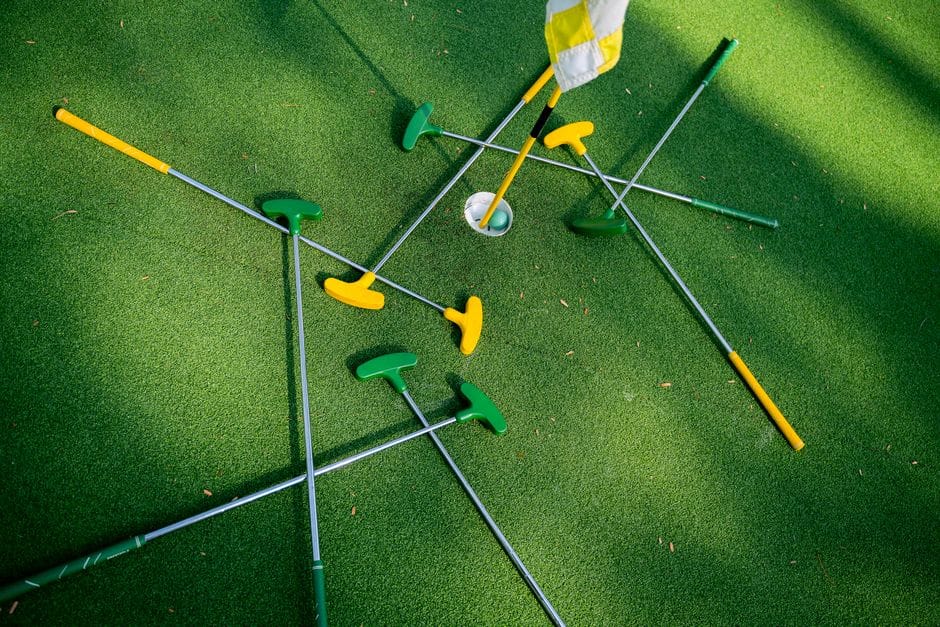
Grip size is crucial. A grip that is too small can cause excessive hand action, while one that is too large may restrict feel. Most manufacturers offer standard, midsize, jumbo, and even armlock sizes for specific putting methods. The best way to determine your size is through a fitting session where you can test different diameters and shapes with real putts.
Several brands dominate the putter grip market, each with unique technologies and price points. Understanding the differences can help you narrow your choices.
SuperStroke is the most recognized name in oversized putter grips. Their Zenergy line includes the WristLock, Pistol, Flatso, and Tour models. The WristLock features a unique wrap that stabilizes the lead wrist, while the Tour has a more rounded profile. Prices range from $35 to $40, and custom embroidery with logos or text is available.
Golf Pride offers the Zero Taper, Reverse Taper, and Pro Only series. The Zero Taper maintains a constant diameter from end to end, popular among purists. The Reverse Taper increases in thickness toward the top, acting as a counterbalance. Prices range from $15 to $40, making them an affordable upgrade.
JumboMax grips include the JMX Pistol, Mid-Jumbo, JumboFlat 13, and ST/1.2 15. Prices are $15 to $30. The ST/1.2 15 is a flat-front model with a 15-degree built-in angle for wrist relief. Their Armlock 21 model is designed for the arm-lock putting method, with an extended length for forearm placement.
For a premium feel, The Grip Master produces leather putter grips in classic wrap and signature laced styles. Prices range from $30 to $100. These grips offer exceptional tackiness and durability, improving over time with use. They are a favorite among golfers who prioritize feel and craftsmanship.
Winn, Lamkin, Iomic, and 2Thumb are also major players. Winn grips are known for their soft polymer material that reduces vibration. Lamkin offers the ST+2 Genesis with a textured surface for tackiness. Iomic makes thin, tacky grips popular in Japan for their moisture-wicking properties. 2Thumb features a unique thumb rest design that promotes a neutral wrist position. Retailers like Grips4Less stock these options for easy ordering.
Upgrading to a grip that matches your stroke can deliver measurable improvements:
Custom fitting using launch monitor data — like we do at MB Custom Golf — can pinpoint the ideal grip shape, size, and weight for your unique swing characteristics. For example, a golfer with a fast tempo might benefit from a heavier grip to slow the transition, while a smooth stroker might prefer a standard weight for better feel.
Proper installation is key to realizing the benefits of your new grip. A misaligned grip can cause you to aim incorrectly, negating the advantages of a good shape and size. Here are a few tips:
If you are not confident in your DIY skills, a professional installation is recommended. A misaligned grip can add variability to your putting stroke, especially on short putts where aim is critical.
Many brands offer customization to make your putter uniquely yours. SuperStroke and The Grip Master allow you to add logos, monograms, or custom text. You can choose from dozens of colors to match your bag or personal style. Custom grips are often available with a lead time of one to two weeks. Prices vary, but the added personal touch can boost confidence on the greens.
Whether you are a weekend golfer in Wyomissing or a competitive player from Reading, the right putter grip can shave strokes off your game. At MB Custom Golf, we fit and build every club to your swing — no shortcuts, no retail pressure. Book an appointment to experience the difference precision makes.
For serious golfers seeking consistency and tighter dispersion, the shaft is far more than a connector between grip and clubhead. It is the engine that delivers energy to the ball, and its stability directly impacts accuracy. Enter TPT shafts, a premium line built on a radically different manufacturing process that eliminates the common problem of shaft spine. Unlike traditional hand-rolled graphite shafts, TPT shafts are made using an automated continuous winding process, producing a spine-free, seamless structure that reduces parasitic bending and twisting during the swing. This technology, derived from high-performance racing sails, promises more consistent strikes and tighter shot patterns. For Berks County golfers looking to maximize performance, understanding what TPT shafts offer can be a game-changer.
TPT's parent company, NTPT, began developing Thin Ply Technology in 2004 for racing sails, which endure extreme loads and require absolute consistency. This expertise was adapted for golf shafts, resulting in a product that delivers uniform stiffness around the entire circumference of the shaft. The absence of a spine means the shaft performs identically no matter how it is oriented in the hosel, a critical advantage for golfers who want predictable ball flight swing after swing.
Traditional graphite shafts are typically constructed by wrapping layers of carbon fiber around a mandrel by hand. This method often creates a seam and an inconsistent wall thickness, leading to a spine — a stiffer side that causes the shaft to bend asymmetrically. To compensate, club fitters must align the spine in a specific orientation, but this only partially resolves the issue. TPT eliminates this problem entirely through its patented continuous winding process, which wraps carbon fibers in an automated, precision-controlled manner. The result is a shaft with uniform stiffness around its entire circumference, meaning no spine and no need for special alignment. This spine-free design allows the shaft to bend and recover more consistently, delivering the same performance on every swing. The automated process also ensures that each shaft is virtually identical to the next, a level of quality control impossible with hand-rolling. For serious golfers, this translates to fewer variable shots and more confidence in the equipment.
TPT offers two main driver shaft models for 2024 and beyond: the Nitro and the Power. Both leverage spine-free construction but target different player profiles and budgets. Understanding the distinction is key to selecting the right option for your game.
The Nitro is designed for golfers seeking the ultimate in stability and low torque. It is available in weights ranging from 45 to 55 grams (uncut), making it one of the lightest premium shafts on the market. This light weight helps generate higher clubhead speed for players with moderate swing speeds, while the low torque (around 2.5 degrees) ensures that the shaft resists twisting on off-center hits. The Nitro has been used by tour professionals and was praised by MyGolfSpy reviewer Tony Covey, who reported his longest and straightest drives during testing of the TPT Nitro 17 LO. With a price starting at $650, it is a serious investment for those who demand every advantage.
The Power model offers a lower price point starting at $380 but still delivers the signature TPT stability. It is slightly heavier, with weights from 55 to 75 grams, and provides a torque value around 3.0 degrees. This makes it suitable for a wider range of swing speeds and player preferences, including stronger swingers who want control without excessive weight. The Power retains the same spine-free construction and automated winding process, so you get the same fundamental consistency benefits. For many amateur players, the Power represents an excellent balance of performance and value.
The core benefit of TPT shafts is improved consistency. By eliminating the spine, the shaft behaves identically regardless of how it is rotated in the hosel. This means that on every swing, the shaft’s bending profile remains the same, leading to less variance in ball speed, launch angle, and spin. A GolfWRX reviewer testing the TPT Nitro 16/Hi noted very little variation in ball speed, spin, and launch, with excellent dispersion on off-center hits. For serious golfers, that translates to tighter shot groups and more predictable distance. The reduction in parasitic bending and twisting also means that more energy is transferred directly to the ball, potentially increasing overall distance. On a launch monitor like the Foresight GCQuad, the benefits become quantifiable: tighter clusters of data points, improved smash factor, and reduced lateral dispersion. For golfers who track their numbers, TPT shafts provide measurable improvements over hand-rolled alternatives.
Consistency in shaft performance also impacts short-term scoring. When you can rely on the same feel and flex pattern on every swing, you can trust your shot shape and commit more fully to the target. This psychological benefit is difficult to quantify but no less real for competitive golfers.
TPT offers an online fitting tool that helps narrow down shaft options based on swing characteristics and preferences. The tool asks about swing speed, tempo, release timing, and desired ball flight to recommend a model, flex, and weight. While this provides a starting point, for the most accurate fit, an in-person session with a certified fitter is strongly recommended. During a fitting, a professional will analyze your swing using launch monitor data to select the optimal TPT model and flex. The fitter will also consider torque values, kick point, and overall balance to ensure the shaft complements your swing dynamics. The process is transparent and data-driven, ensuring that the shaft matches your unique swing. At MB Custom Golf, we use a Flightscope Mevo+ launch monitor and Mitchell-calibrated tools to capture every detail, from clubhead speed to impact location. This precision fitting is essential to unlocking the full potential of TPT shafts.

TPT shafts have earned over 70 tour wins across the PGA, DP World, Asian, Japan, LPGA, and Korn Ferry tours, demonstrating their performance at the highest level. In independent reviews, the feedback has been consistently positive. MyGolfSpy’s Tony Covey praised the Nitro for delivering his longest and straightest drives, while GolfWRX testers highlighted the minimal variation in ball speed on off-center hits. These real-world validations underscore the shaft’s ability to enhance consistency for skilled players. Compared to other premium shafts like HZRDUS, Fujikura, or Mitsubishi Diamana, TPT offers a unique spine-free construction that many golfers find delivers a smoother, more consistent feel. The tour adoption rate is a testament to the technology's effectiveness.
The premium price of TPT shafts — starting at $380 for the Power and $650 for the Nitro — reflects the advanced manufacturing process and the performance benefits. For serious golfers who compete or track their scores, the reduction in dispersion alone can lower scores by keeping balls in play and on the correct side of the fairway. When compared to other premium shafts like HZRDUS or Fujikura, TPT offers a unique spine-free construction that many golfers find delivers a more consistent feel. The investment is not just in the shaft itself but in the precision and reliability it brings to every shot. For golfers in Berks County, the opportunity to test and fit TPT shafts with a certified expert ensures that your investment is optimized for your swing.
For golfers in Berks County, including Reading, Wernersville, Wyomissing, Sinking Spring, and West Lawn, MB Custom Golf offers a private, appointment-only fitting studio where TPT shafts can be tested and fitted. Unlike big-box retailers, MB Custom Golf provides a one-on-one experience with a certified fitter who uses launch monitor data and Mitchell-calibrated tools to ensure every build is exact. From fitting through club building, you work directly with an expert who understands the nuances of shaft technology. To schedule a fitting for TPT shafts, contact MB Custom Golf today and experience the difference that spine-free precision can make in your game.
When it comes to lowering your scores, few changes have as direct an impact as a properly fitted putter. Unlike off-the-rack options that force you to adapt to their specifications, custom golf putters are built, measured, and matched to your unique stroke—delivering more consistent roll, tighter dispersion, and greater confidence on the greens. At MB Custom Golf, we combine launch monitor data with precision build techniques to ensure every putter we fit performs exactly as intended.
Many golfers overlook the putter as a candidate for fitting, often assuming that any quality head will do. But the reality is that putters are the most personal clubs in the bag. Factors like lie angle, length, loft, head weight, and grip size all interact with your natural stroke mechanics. A putter that is even slightly off can cause you to compensate, leading to inconsistent contact and missed putts. By contrast, a custom-fitted putter allows you to make a repeatable, free-flowing stroke that squares the face at impact time after time.

A custom putter fitting starts with an analysis of your stroke using a launch monitor. The launch monitor captures data such as face angle at impact, path direction, strike location, and ball speed. This real data, not guesswork, reveals exactly what your putter needs to produce a pure roll. For example, if your launch monitor shows a tendency to leave the face open, a slight lie angle adjustment or additional toe hang could help square the face naturally. If you consistently strike the ball off-center, a mallet with higher MOI (moment of inertia) can reduce the penalty on those mis-hits.
Beyond data, the fitting process includes an assessment of your setup and eye dominance. The length of the putter affects your posture and visual alignment. Too long and you may stand too upright, pulling putts left; too short and you may crouch, leading to pushes. Lie angle that is too upright or flat will cause the toe or heel to lift, influencing the starting line. Loft ensures the ball launches properly for a forward roll without bouncing. All of these variables are measured and dialed in during a fitting at MB Custom Golf.
One of the first decisions in putter fitting is the head shape. Broadly, putters fall into two categories: blades and mallets. Blade putters are traditional, compact heads with a thin top line and minimal offset. They offer exceptional feel and feedback, making them popular among players who prefer to sense every nuance of the stroke. However, blades have lower MOI, meaning they are less forgiving on off-center hits.
Mallet putters feature larger, more weighted heads that distribute mass to the perimeter. This design increases MOI, providing greater stability and less twisting on off-center strikes. Mallets are often easier to align and can help golfers with an arc or straight-back-straight-through stroke maintain a consistent face angle. Some mallets, like the Odyssey Ai-DUAL or L.A.B. Golf models, use advanced weighting and face technologies to enhance forgiveness and roll.
The choice between blade and mallet is not about one being better—it's about what matches your stroke characteristics. At MB Custom Golf, we test both styles with your actual swing to see which yields the best launch conditions and dispersion. Many golfers are surprised to find that a mallet they never considered actually produces tighter groupings.
While head style gets most of the attention, the shaft and grip play critical roles in how a putter performs. Putter shafts come in various materials and flex profiles. Steel shafts are standard, offering consistent feel and torque. Some players prefer a graphite shaft for vibration dampening, especially on faster greens. The length of the shaft is custom-fitted based on your wrist-to-floor measurement and posture at address.
Grips are equally important. The size, shape, and texture of the grip influence hand action and pressure. A thicker grip can reduce wrist movement, promoting a more stable, arm-driven stroke—beneficial for players with a tendency to manipulate the face. A thinner or pistol-shaped grip may offer more feel and control for those with a refined stroke. At MB Custom Golf, we stock a range of grip options and help you select one that complements your stroke type and comfort preferences.
A launch monitor isn't just for full swings; it's an essential tool for putter fitting. It measures key metrics: face angle at impact (open or closed), path (inside-out or outside-in), and strike location (heel, toe, center). With this data, we can identify specific tendencies and prescribe adjustments. For instance, if the launch monitor shows a consistently closed face, we might increase head weight to slow the release or change the balance point. If the ball is starting off-line, we check lie angle and alignment.
The launch monitor also assesses launch angle and spin. A putter with too much loft can cause the ball to bounce and skid before rolling; too little loft can drive the ball into the ground. The ideal launch angle is between 2 and 4 degrees, with zero side spin for a pure roll. By dialing in these numbers, we ensure that your putter delivers consistent distance control and a true roll from the first putt to the last.
Several brands lead the way in putter technology and are available for custom fitting. Odyssey offers innovative faces like Ai-DUAL and Jailbird, as well as the Square 2 Square alignment system. Their Damascus Milled models reach up to $699.99, but they also have more affordable options. Vice Golf produces putters with Zero Twist technology, which reduces face rotation through impact. L.A.B. Golf is renowned for its lie angle balanced putters that resist twisting. Scotty Cameron and Bettinardi are known for premium CNC-milled heads with exceptional feel. Ping and TaylorMade also offer adjustable weight systems and advanced face inserts. Evnroll's unique groove face ensures consistent ball speed across the face. At MB Custom Golf, we can source heads from many of these brands, as well as PXG, and fit them to your exact specifications.
Used putters can also be a great option if they are properly fitted afterward. Companies like Next Round Golf offer pre-owned putters from L.A.B., Scotty Cameron, and Ping in conditions from Mint to Value. However, even a high-quality used putter should be checked for lie angle, length, and loft and adjusted to your stroke. Buying used and then fitting it can be a cost-effective way to get a premium putter without paying full retail.
At MB Custom Golf, every putter we sell is assembled in-house with Mitchell-calibrated tools to ensure every spec is exact. We verify the loft, lie, and face angle before any build, then match the shaft, grip, and head weight to the fitting data. The final club is checked again with our launch monitor to confirm performance. This level of precision is rare in retail environments, where clubs are often assembled with generic specs. Our one-on-one private studio in Wernersville, PA, allows us to spend the time necessary to get it right. Whether you choose a new Odyssey, Vice, or a used Scotty Cameron, we build it to your stroke, not to a stock number.
Custom golf putters are not a luxury—they are a performance necessity for any serious golfer. By fitting the putter to your unique swing characteristics, you eliminate variables and build a repeatable, confident stroke. Lower scores start on the greens, and the right putter, built with precision, is the quickest path to better putting.
A golf wedges distance chart is the foundation of scoring consistency. Without precise knowledge of how far each wedge carries, you're guessing on approach shots—and guesswork rarely leads to lower scores. By building a personalized chart based on your swing data, you can attack pins with confidence and eliminate the dreaded half-shot uncertainty.
At MB Custom Golf, we use launch monitor data and Mitchell-calibrated tools to fit and build wedges that match your swing characteristics. A wedge distance chart is not a one-size-fits-all table; it's a tailored yardage guide that accounts for your swing speed, angle of attack, and turf interaction. In this guide, we'll walk through lofts, average distances by handicap, and how to create your own chart using the clock method—so you can step up to every wedge shot knowing exactly what to expect.
Wedge lofts determine trajectory, spin, and distance. Standard lofts for modern wedge sets are:
Each wedge serves a specific purpose. The PW handles longer approach shots and full swings. The GW bridges the gap between PW and SW. The SW excels from bunkers and softer lies with its higher bounce, and the LW offers maximum loft for delicate, high-soft-landing shots. Most sets include the PW from your iron set plus two to three dedicated wedges spaced 4–6° apart to cover distance gaps.
But loft is only part of the equation. Bounce angle, measured in degrees, affects how the club interacts with turf. Higher bounce (10°–14°) prevents digging on soft turf, while lower bounce (4°–8°) suits firm conditions. Sole grind also impacts versatility; a wider sole offers more forgiveness, while a narrower sole allows for open-face shots. When fitting wedges, we consider your typical playing conditions and swing type to recommend the right bounce and grind combination. This ensures your wedge not only goes the right distance but also performs consistently from different lies.

While your personal distances depend on swing speed and technique, data from Shot Scope and other tracking systems provide benchmarks. For a 0-handicap golfer, average carry distances for full swings are:
For a 10-handicap golfer, typical distances are:
For a 20-handicap golfer, those numbers drop to:
These averages highlight the importance of knowing your own numbers. A golfer with a faster swing may hit their PW 150 yards, while a slower swing might produce 120 yards. The only way to know for sure is to test with a launch monitor under consistent conditions. Also note that distances vary by manufacturer; for example, Titleist and Ping wedges may have slightly different lofts than Stix Golf or LAZRUS Golf models. Always confirm the actual loft of your wedges rather than relying on the club name.
Creating your own golf wedges distance chart involves systematic testing on a launch monitor. Here's how to do it:
For example, with your PW, you might find a full swing carries 130 yards. A 10:30 swing goes 115 yards, a 9:00 goes 95 yards, and a 7:30 goes 80 yards. Record these numbers in a simple chart for quick on-course reference. Laminate the chart and keep it in your bag or in a pocket for easy access.
Consistent partial swings are the key to dialing in distances between full shots. The clock method works because it ties distance to backswing length, assuming a smooth tempo and consistent follow-through. For each wedge, memorize the carry distance for each clock position. Practice these swings on the range until they become automatic. Remember that 86% of wedge shots involve turf interaction before the ball, so clean, centered contact in the bottom four grooves maximizes spin and control.
Common mistakes include swinging too fast on longer swings or decelerating on short swings. Use a metronome app or count a steady rhythm (e.g., one-one-thousand for tempo) to maintain consistency. Also, ensure your grip pressure remains constant; too tight can hinder wrist hinge and rob distance. The clock method is not just for full swing wedges; you can also apply it to longer irons for more precise yardages.
Even lofts gaps are critical for consistent distance coverage. Most professionals carry four wedges (including PW) with 4–6° increments. For example, a set might include PW 46°, GW 50°, SW 54°, and LW 58°. This creates roughly 10–15 yard gaps between full swings, which can then be filled with partial swings. If you only carry three wedges (PW, SW, LW), you may have a larger gap between PW and SW. In that case, consider bending one wedge or adding a gap wedge. Also consider shaft length; shorter shafts produce lower ball speed and distance, so a consistent length progression (e.g., every 0.25 inches) helps maintain consistent swing mechanics.
A wedge distance chart is only useful if you use it. Before each shot, determine your target carry distance, then select the wedge and swing length that match your chart. If you're between clubs or swing lengths, favor the longer, smoother swing for better control. Avoid the temptation to force a club to fit a distance—that leads to tension and poor contact.
When faced with a front pin, aim for the center of the green and use your stock full swing if the distance matches. For a back pin, consider adding one club length or using a three-quarter swing with the same club. Also, factor in wind and elevation. Into the wind, add 5–10% distance; downwind, subtract. Uphill shots play longer, downhill shorter. Your launch monitor baseline from the flat range is a starting point; adjust based on conditions.
Finally, trust your chart during the round. If you hit a shot that feels perfect but comes up short, verify your distances on the range later. Factors like cold weather or fatigue can reduce distance. Keep a small notebook or use a phone app to track actual on-course distances and refine your chart over time.
Building a golf wedges distance chart takes time, but the payoff is lower scores and fewer wasted shots. At MB Custom Golf, we use launch monitor data and precision build techniques to ensure each wedge is built, measured, and matched to your swing. Whether you're a single-digit handicapper or a weekend warrior, knowing your exact yardages transforms your wedge game from guesswork to precision. Schedule an appointment today to get started on your personalized wedge distance chart.
