Choosing the right iron shaft is one of the most important decisions a golfer can make, yet many players rely on guesswork or brand loyalty. An iron shaft fitting tool helps take the uncertainty out of that choice by matching your swing characteristics to the optimal shaft profile. These tools—offered online by major manufacturers and fitting studios alike—use data like swing speed, tempo, and desired ball flight to generate recommendations. But how accurate are they, and can they replace a professional fitting? Let's break down what an iron shaft fitting tool can and cannot do.
Golf Driver Shaft Fitting: Precision Build for Berks County Golfers
Whether you're a Berks County golfer looking to upgrade your irons or simply curious about shaft options, understanding the role of these tools is the first step toward better performance. From free online questionnaires to launch monitor–based fittings at a studio like MB Custom Golf, the journey from data to club matters. In this article, we'll explore how to use these tools effectively, their limitations, and why a one-on-one fitting session with real launch data ultimately delivers the best results.
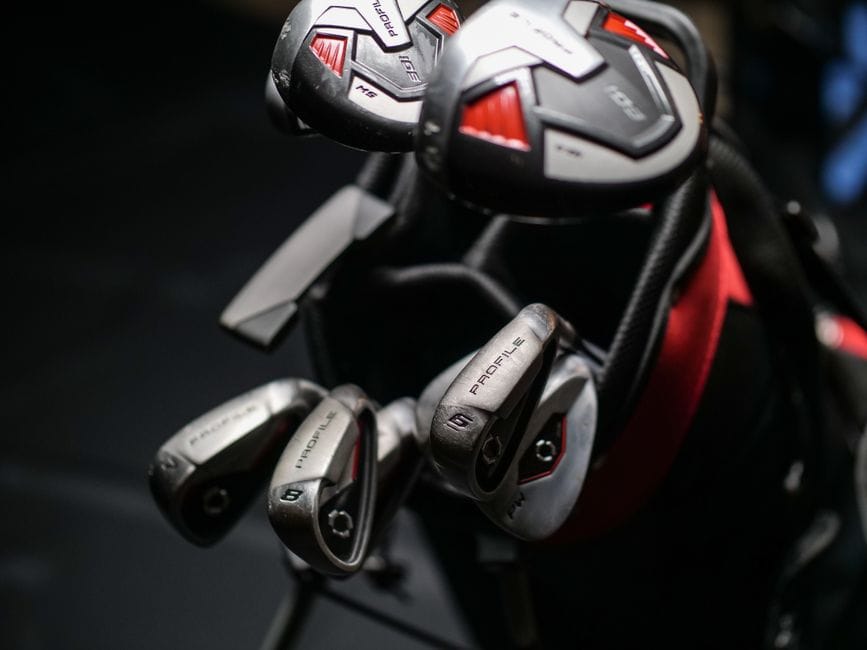
An iron shaft fitting tool is a system—often an online questionnaire or software—that recommends iron shafts based on your swing profile. Major manufacturers such as Mitsubishi Golf, KBS Golf Shafts, and True Temper offer free online versions. These tools typically ask about your handicap, swing speed, current shaft details, and desired trajectory. The GolfWorks tool uses a Matching Performance Factor (MPF) to assess club head speed, desired trajectory, and shot correction needs, then returns a list of compatible shafts. The MPF system assigns a numeric value to each shaft based on weight, flex, and bend profile, allowing you to compare options objectively.
For example, Mitsubishi's online fit tool includes four steps covering player profile, current shaft, swing characteristics, and buying preferences. After entering your information, you receive a handful of shaft recommendations. These serve as a starting point, giving you a shortlist to test in person. The tool may also suggest weight ranges and flex options based on your inputs. KBS offers a similar tool that focuses on feel and trajectory, while True Temper provides recommendations for their Dynamic Gold and Project X families.
Using an online iron shaft fitting tool is straightforward, but accuracy depends on honest and precise inputs. Here's a typical workflow with best practices:
Forum discussions on The Hackers Paradise suggest online tools work best for irons but may not always align with physical fitting results. They are excellent for narrowing options but less reliable for final decisions. Haywood Golf's online tool asks six questions to generate a build configuration, but the company emphasizes that in-person fitting is more precise. Users often find that online recommendations point them in the right direction but that actual launch monitor data reveals subtle differences in spin and dispersion that change the choice.
Online iron shaft fitting tools have clear limitations. They rely on self-reported data, which can be inaccurate. Swing speed guessed incorrectly or an exaggerated handicap skews results. Moreover, they cannot capture subtle swing characteristics like angle of attack, dynamic lie, or impact pattern—all of which affect shaft performance. A launch monitor in the hands of a skilled fitter measures real-time data: club head speed, ball speed, launch angle, spin rate, and dispersion. With Mitchell-calibrated tools and a private studio environment, a fitting session at MB Custom Golf provides verified specs that no online tool can match.
For instance, two golfers with the same swing speed and handicap may have vastly different angle of attacks: one steep, one shallow. The steep player might benefit from a low-spin shaft, while the shallow player needs more spin for stopping power. An online tool cannot capture this. Additionally, the weight feel of a shaft is highly personal. Some players prefer a heavy, butt-stiff shaft for control; others like a lighter, tip-flexible shaft for feel. Only hitting shots with real shafts on a launch monitor can reveal these preferences.
Another limitation is that online tools often only recommend shafts from that specific brand. Mitsubishi's tool won't suggest a KBS shaft, and vice versa. To get a broader view, you need to visit a studio like MB Custom Golf, where we stock multiple OEMs and can cross-benchmark shafts on the same launch monitor.
For serious golfers in Berks County, the difference between an online recommendation and a custom fitting is measurable. While an iron shaft fitting tool is a useful educational resource, it cannot substitute for real-time launch monitor data and the expertise of a trained fitter. At MB Custom Golf, every club is built, measured, and matched to your swing using precision tools and honest advice—no retail pressure, only performance. Whether you're in Reading, Wernersville, or beyond, a one-on-one session turns online starting points into exact specs. Real data, not guesswork, leads to tighter dispersion and more consistent iron play.
Consider this: A golfer using an online tool might be recommended a stiff flex shaft based on an estimated swing speed of 85 mph. But during a live fitting, a launch monitor reveals his actual club head speed is 82 mph with a late release and high spin. The fitter might suggest a regular-plus flex shaft with a lower torque to tighten dispersion. That nuance is lost online. Similarly, lie angle adjustments, grip size, and swingweight all affect performance and can only be dialed in through a physical fitting. For Berks County golfers who want to shoot lower scores, investing in a private fitting session at MB Custom Golf is the surest path to optimized equipment.
