Iron shaft weight is the number most golfers never check, and it is often the single biggest reason their iron play stalls out. Flex gets all the attention, but the grams in your hands shape how the club loads, how your hands release, and how tight your dispersion looks on the card. Get the weight right and the rest of the fitting gets easier. Get it wrong and no amount of swing work will fully cover for it.
This guide breaks down how iron shaft weight works, what the numbers mean, and how to use your own launch data to land in the right range. The goal is simple: built, measured, and matched to your swing.
Shaft weight has a bigger impact on consistency than shaft flex for most golfers. That surprises people who have spent years chasing flex labels, but the logic holds up. Weight changes the total mass you are swinging, which changes your tempo, your transition, and the point where the clubhead releases. Flex changes how the shaft bends, which matters, but it is a secondary variable for the majority of amateur players.
Irons also magnify shaft errors more than drivers do. A driver gets used 14 times a round at most, usually off a tee with a wide margin for error. Irons cover most of your scoring shots, and a small mismatch shows up immediately as a pulled or pushed shot that misses the green by five yards when it should have been pin high. That is why iron shafts deserve more scrutiny than the shaft in your driver, even though the driver gets more attention in every equipment conversation.
Iron shafts typically range from 55 to 130 grams. On the light end you have graphite options at 55 to 75 grams, and on the heavy end tour-weight steel at 120 to 130 grams. The right range for you starts with one number: 7-iron swing speed.
These ranges are a starting point, not a verdict. A launch monitor fitting refines them with tempo, transition, and dispersion data before anything gets ordered.
The 7-iron sits in the middle of the set and gets hit on a predictable trajectory, which makes it the cleanest sample in a fitting session. Measure the 7-iron and you can project the whole set. Tour professionals often land well above the amateur range: True Temper X7 comes in at 132 grams, Project X 6.0 through 7.0 sits at 120 to 130 grams, and True Temper TI X100 checks in at 128 grams. Those numbers are not a target for most players. They simply show how much mass a very fast, very repeatable swing can handle.
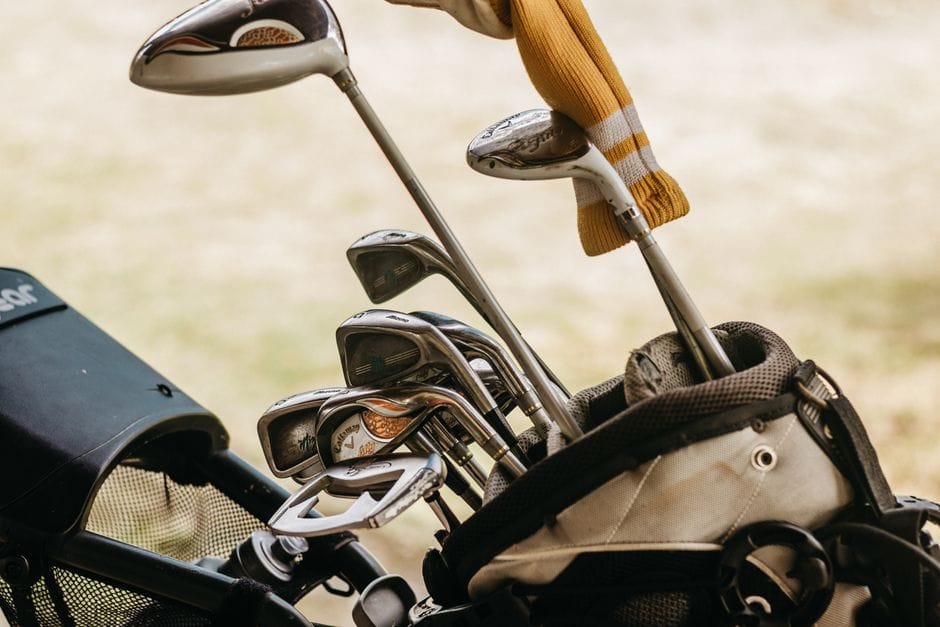
Steel iron shafts typically weigh 90 to 130 grams and offer more feedback and control. You feel the clubhead through the swing, and the extra mass tends to quiet an aggressive transition. Graphite iron shafts typically weigh 50 to 85 grams and absorb more vibration, which matters for players with joint discomfort or a slower swing speed.
The old assumption that graphite means less performance is outdated. The 2026 trend shows tour players moving from 120 gram plus steel into 95 to 105 gram steel or 80 to 95 gram tour-weight graphite, chasing the same control with less fatigue. Graphite has earned its place at every level of the game.
The real question is not steel or graphite. It is how many grams your swing can repeat without losing rhythm, and which material delivers that number with the feel you want at impact.
A shaft that is too light lets your hands get ahead of the club and creates an inconsistent release point. The club feels whippy, your miss spreads both ways, and your distance control suffers because you never quite know where the bottom of the arc is. A shaft that is too heavy forces you to muscle the club and destroys rhythm. You start swinging harder to load it, and hard swings rarely repeat.
Fatigue is the quieter problem. An extra 10 grams per club adds up over 18 holes, and clubs can feel noticeably heavier on the back nine than the front. If your ball striking fades around the 14th hole, weight may be part of the story.
Real player data backs this up. A GolfWRX forum discussion from a player with 113 mph driver speed and a 165 yard 7-iron found that 90 gram shafts hurt his tempo, and he had success no lighter than 115 grams. On the other end, a 74 year old golfer moved to much lighter graphite shafts with excellent results. Weight needs change with age and swing speed, and there is no shame in going either direction.
Most golfers can identify a weight problem before they ever see a launch monitor. Watch for these patterns:
Two or more of those signs is a strong signal that the issue is not your swing, it is the grams in your hands.

A launch monitor fitting measures real data: swing speed, tempo, transition, and dispersion. Real data, not guesswork. That matters because there is no universal flex standard. One manufacturer's stiff can play like another manufacturer's regular, so comparing labels across brands tells you almost nothing about how a shaft will actually perform.
Consider the averages. The average male amateur swings a driver 85 to 95 mph, which fits Regular to borderline Stiff, not the X-Stiff many golfers default to. Those players often buy the stiffest shaft on the rack because it feels stable in the store, then wonder why they lose distance and spray the ball on the course.
In a proper fitting, the process runs in a specific order. Swing speed establishes the range. Tempo and transition narrow it. Dispersion data decides it. A quick, aggressive transition usually needs heavier mass to keep the shaft from running away. A smooth, even tempo can often handle lighter weight and pick up speed in the process. Launch conditions confirm the choice, showing whether the ball is launching and spinning in a window you can repeat under pressure.
The shaft market is deep, and the right answer depends entirely on your numbers. These are the profiles that come up most often in a fitting conversation:
None of these shafts is universally better than another. Each earns its place by matching a specific set of swing characteristics, which is exactly why testing beats reading spec sheets.
MB Custom Golf is a private, appointment-only golf club fitting and building studio in Wernersville, Pennsylvania, serving Berks County. There is no showroom floor traffic, no waiting behind someone at a return counter, and no pressure to walk out with a boxed set. Just one golfer, one expert, and a launch monitor.
Golfers from Reading, Wernersville, Wyomissing, Sinking Spring, and West Lawn use the studio because the experience is focused. Every club is fit and built to a golfer's unique swing using real launch monitor data and Mitchell-calibrated tools, so the specs you get fitted for are the specs that show up in the finished club. That last part is the difference between a recommendation and a result.
The process stays honest from start to finish. If your current irons are already in a workable weight range, you will hear that. If a different iron shaft weight would tighten your dispersion, you will see the numbers that prove it. And if you want to understand why 15 grams changed your ball flight, someone will walk you through it in plain language before you ever commit to a build.
Iron shaft weight is not a detail you can leave to chance. It decides how the club feels in your hands, how your tempo holds up over 18 holes, and how many of your iron shots finish where you aimed. Measure it, test it, and build around it.
